Who is this for
Perhaps you study Philosophy, Literature, History, Linguistics or Cultural Studies. Perhaps your degree is the kind people ask about with a polite tilt of the head “And what will you do with that?“
You have spent years learning how stories are built, how meaning is made, how people think and why they act. You play games, and somewhere along the way you began reading them the way you read everything else: closely, critically, with questions. You simply haven’t been told that this is a qualification.
It is. And you are exactly who we hoped would find us.
Not only diverse hires, but diverse architects
Virginia Woolf argued that writing needed a room of one’s own. A century later, the question is no longer only whether we are let into the room, but whether we may change it.
Too often, people who enter a system that was not built for them, whether because of gender, background, neurodiversity or race, are expected to be grateful simply to be there. We would rather they arrive able to reshape the place: to bring other questions, other stories, other ways of seeing.
This society is our small, early and deeply personal way of beginning. Anyone who shares that hope is welcome to build it with us.

What the society offers
- A mentor of your own, someone who works in games today and walks part of the way with you, one conversation at a time.
- We help you translate your craft, help you see how close reading becomes player insight, how an essay becomes a design argument, how theory becomes research.
- A second reading of your CV and portfolio, so that what you have done reads as an asset rather than an apology.
- Practice in speaking about yourself, without the hedging, the softening, the onlys and justs.
- Knowledge, like any good story, is meant to be passed on. Therefore, we offer free mentoring.
A note from the founder
I came into the games industry with an MA in Literature and Linguistics. One of the first trainings my new team was offered was an introduction to storytelling. I remember sitting there, quietly amused. I had spent years at university taking stories apart, sentence by sentence, structure by structure, and arguing about what they meant.
Today I work as a Senior User Researcher. People imagine the job as numbers and dashboards, and those are part of it. But about 70% of what I do is communication. Finding the story inside the data and telling it so that a team believes it and acts on it. I didn’t learn that in a games course. I learned it reading novels and arguing about them.
That was when I understood something I have been trying to say ever since: much of what the industry sets out to teach, Humanities graduates already carry with them. They simply haven’t been told it is worth something.
The moment that made me found this society came later, from the other side of the table. I was hiring for my team, and we invited a woman whose application was genuinely impressive. Then came the classic question: walk us through your experience. She took her own story apart, piece by piece. I still remember her mentioning a job at a startup and adding, almost apologetically, that it wasn’t really relevant, because it was only a startup.
I wanted to stop the interview and tell her what I knew. I have worked at startups. They are a hard school in skills and resilience; a goldmine for experience, if not always for one’s peace of mind. But in that moment, on that side of the table, I couldn’t help her.
I never want to watch that happen again. Not because I can step in each time, but because no one should arrive at that table without having learned to read their own story generously.
There is a second, quieter reason this society exists. Research suggests that women tend to underestimate their abilities while men tend to overestimate theirs, and anyone who doesn’t fit an industry’s default image knows some version of that doubt. In a field that rewards those who speak loudest about themselves, the doubt becomes missed chances. This is not a flaw in the people but rather what the system produces. So we begin early, before the first application, and help you walk in knowing what you are worth.
— Natali Rein, Founder

Why the Humanities belong in games
A game is a story you can walk into. It is a world with its own rules, cultures, languages, ethics and inhabitants. The Humanities have been asking questions about exactly these things for a very long time! How worlds are imagined, how meaning is made, how people decide what matters.
The working world is beginning to say the same, in its own vocabulary. The World Economic Forum’s Future of Jobs Report 2025 names analytical thinking, creative thinking, leadership and empathy among the core skills employers need. Read it closely and it sounds very much like a Humanities curriculum, translated into the language of business.
Deloitte’s 2026 Global Human Capital Trends puts it more plainly: “Technology, especially something as increasingly ubiquitous as AI, is replicable. People aren’t.”
Nor is this only a matter of principle. Graduates of the arts, humanities and social sciences make up 55% of global leaders and 58% of FTSE executives (British Academy), and employers rate Humanities graduates highly on collaboration and communication (Deloitte Access Economics, The Value of the Humanities).
What you have studied already has a place here. It is only waiting to be translated:
- Close reading becomes player insight, user research and narrative design.
- Argumentation becomes pitching, design rationale and the art of persuading a team.
- Cultural and historical analysis becomes worldbuilding, localization and representation.
- Ethics and philosophy become player wellbeing, trust and safety, and responsible design.
- Linguistics becomes localization, dialogue systems and the small words that guide a player through an interface.
Your degree is a way of seeing the industry has not yet learned to look for. The methods and tools that complete it can be learned, and we will show you where.
Our Mentors
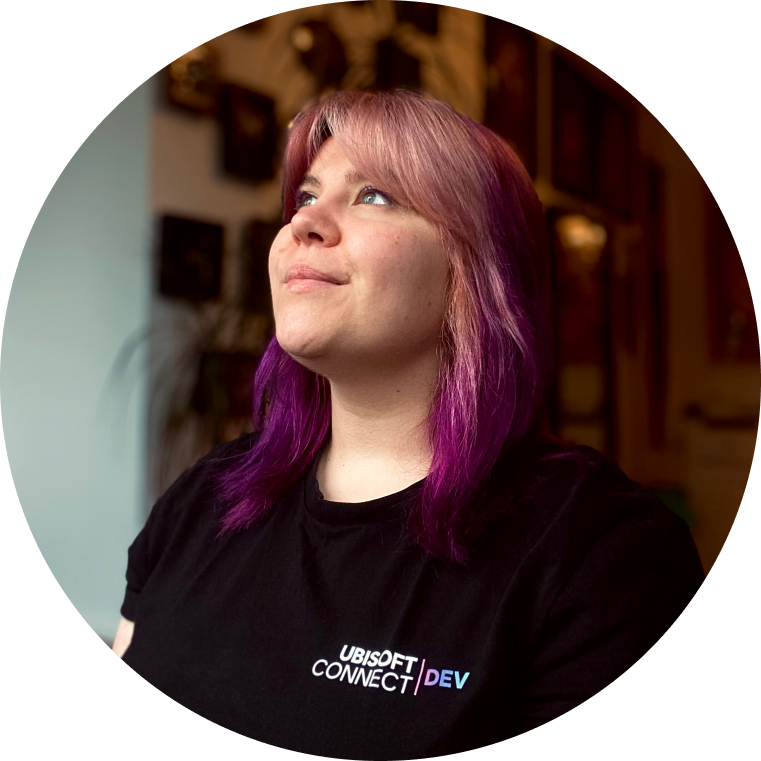
Natali Rein
Founder & Mentor
Senior User Researcher, Ubisoft Germany
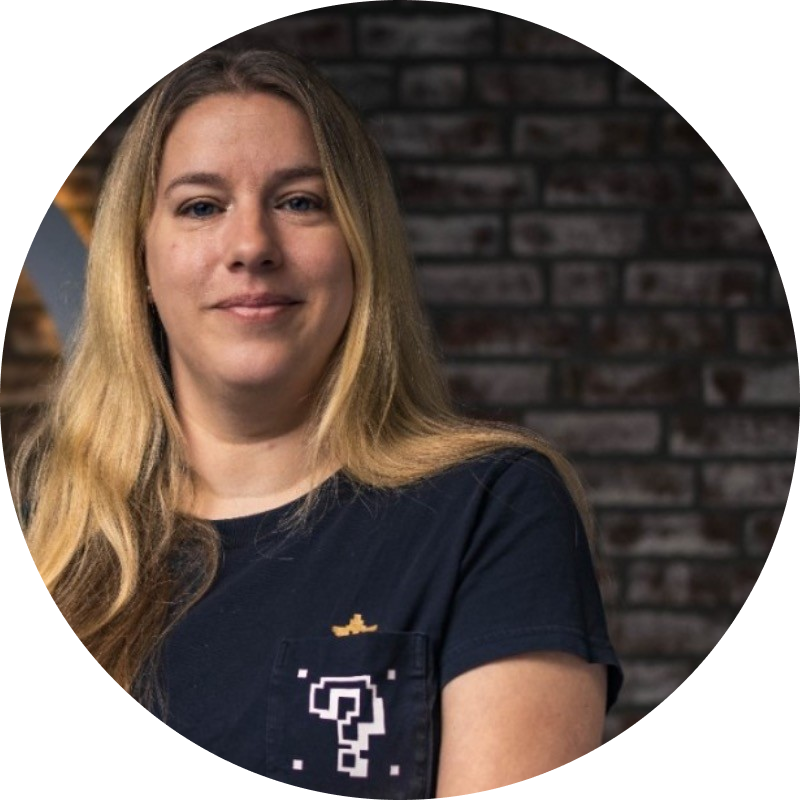
Annick Vins
Co-Founder & Mentor
Project Lead Innovation, Rheinbahn
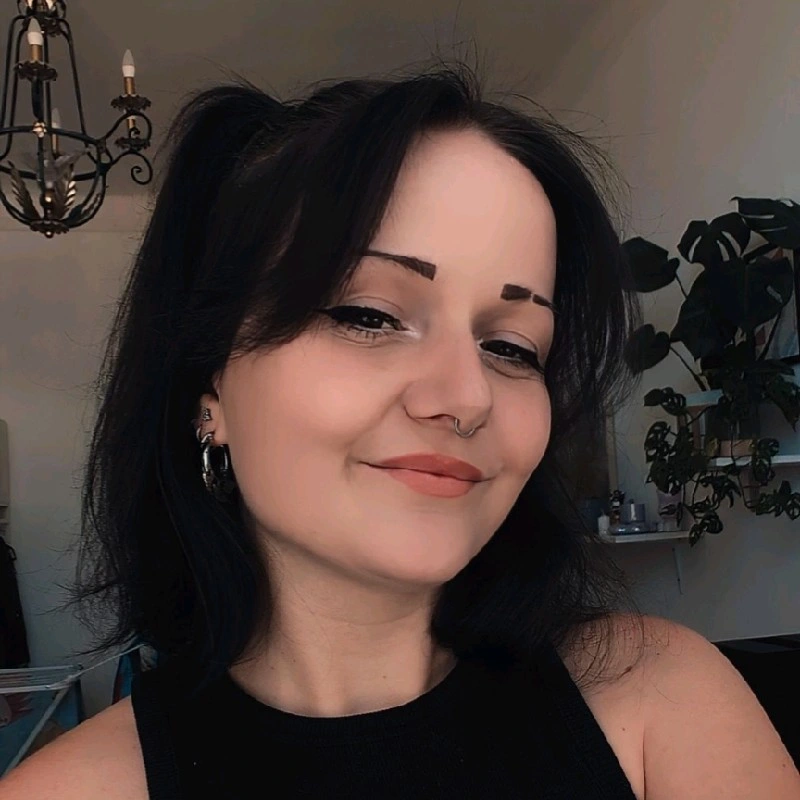
Isabel Grünberg
Mentor
Narrative Designer, Positive Impact Games

Ela Petterhansl
Mentor
Senior UX Designer, Embark

Program Allies